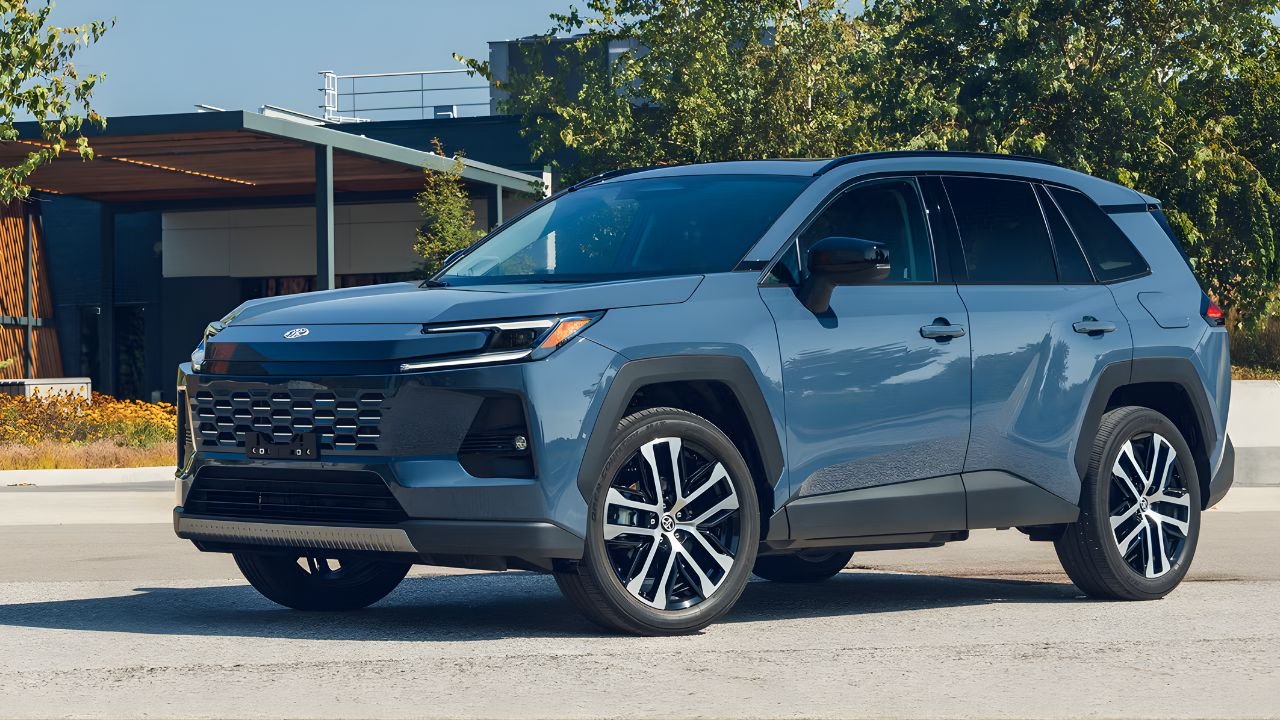
The automotive landscape is undergoing a seismic shift toward electrification, and the 2026 Toyota RAV4 stands at the forefront of this evolution. As the sixth generation of North America’s best-selling SUV, the 2026 model marks a historic turning point: the complete discontinuation of purely gasoline-powered engines. By transitioning to an all-hybrid lineup, Toyota has signaled a commitment to efficiency without sacrificing the rugged utility that made the RAV4 a household name. This new iteration, built on the refined TNGA-K platform, introduces a “hammerhead” front-end design that aligns it with Toyota’s modern aesthetic seen in the Prius and Crown. Drivers can now choose between three distinct design directions—Core, Rugged, and Sport—ensuring that whether you are navigating a narrow downtown alley or a muddy mountain pass, there is a RAV4 specifically tuned for your lifestyle.
Performance and Powertrain Innovations
Under the hood, the 2026 RAV4 debuts Toyota’s fifth-generation hybrid system, pairing a 2.5-liter four-cylinder engine with more powerful electric motors. For the first time, a front-wheel-drive (FWD) hybrid configuration is available, producing a combined 226 horsepower, while the all-wheel-drive (AWD) variants push that output to 236 horsepower. This setup provides a noticeable boost in low-end torque, making highway merging and city overtakes feel significantly more effortless than in previous years. For those seeking maximum performance, the Plug-in Hybrid (PHEV) models—formerly known as the RAV4 Prime—now deliver a staggering 324 horsepower. These PHEVs are not just about speed; they offer an expanded all-electric range of up to 52 miles, allowing the average commuter to complete their daily travels without ever sipping a drop of gasoline.
2026 Toyota RAV4 Key Specifications Comparison
| Feature | Hybrid (HEV) | Plug-in Hybrid (PHEV) |
| Engine | 2.5L 4-Cylinder Hybrid | 2.5L 4-Cylinder PHEV |
| Combined Horsepower | 226 hp (FWD) / 236 hp (AWD) | 324 hp |
| 0–60 MPH Time | Approx. 7.3 Seconds | Approx. 5.5 Seconds |
| Fuel Economy (Comb.) | Up to 43 MPG | Up to 41 MPG (Hybrid Mode) |
| Electric-Only Range | N/A | Up to 52 Miles |
| Max Towing Capacity | 1,750 lbs | 3,500 lbs |
A Modernized Cabin Focused on Tech
Stepping inside the 2026 RAV4 reveals a cabin that has been completely reimagined to meet the demands of the digital age. The centerpiece is the new Arene software platform, which powers a standard 10.5-inch or an available 12.9-inch high-definition touchscreen. Unlike the previous “tablet-stuck-on-dash” look, the new display is elegantly integrated into a minimalist center stack. Physical buttons for high-frequency tasks remain, but the digital HVAC controls are now pinned to the bottom of the screen for easier access. Furthermore, every trim level now features a 12.3-inch fully digital gauge cluster as standard equipment, offering customizable layouts that can display everything from hybrid energy flow to full-screen navigation maps. Material quality has also seen a vertical climb, with soft-touch surfaces and sophisticated color palettes like “Meteor Shower” and “Urban Rock” replacing the utilitarian plastics of the past.
Off-Road Capability and the GR Sport Debut
Toyota has expanded the RAV4’s personality by introducing specialized trims that cater to niche enthusiasts. The “Woodland Edition” returns for the Rugged line, featuring a 0.5-inch suspension lift, all-terrain tires, and a new 3D Multi-Terrain Monitor that lets you see “through” the hood to spot obstacles on the trail. However, the most talked-about addition for 2026 is the first-ever RAV4 GR Sport. Developed alongside Toyota GAZOO Racing, this trim isn’t just an appearance package; it features a 20mm wider track for increased stability, uniquely tuned springs, and performance dampers. It bridges the gap between a family hauler and a performance crossover, offering a stiffer, more communicative steering feel that encourages spirited driving on winding backroads.
Safety Standards and Pricing Expectations
Safety remains a cornerstone of the Toyota brand, and the 2026 RAV4 introduces Toyota Safety Sense 4.0. This updated suite includes Proactive Driving Assist, which provides gentle braking into curves, and an enhanced Pre-Collision System that can detect motorcyclists and bicyclists in low-light conditions. Regarding the financial aspect, the shift to an all-hybrid lineup means the entry price has naturally increased compared to the old base gas models. In the United States, pricing is expected to start around $31,500 for the LE Hybrid, while the top-tier PHEV GR Sport can climb north of $52,000. While the upfront cost is higher, the long-term value proposition is bolstered by exceptional fuel economy and Toyota’s legendary resale value, making it a pragmatic choice for the environmentally conscious and budget-savvy driver alike.
Final Verdict on the Sixth Generation
The 2026 Toyota RAV4 succeeds because it doesn’t try to reinvent the wheel; instead, it perfects it. By leaning into its strengths—reliability, space, and efficiency—while injecting much-needed modern technology and diverse performance options, Toyota has ensured the RAV4 will remain the benchmark for the compact SUV segment. It is a vehicle that feels as comfortable at a suburban grocery store as it does at a remote trailhead. For anyone looking for a no-compromise vehicle that balances the transition between internal combustion and full electrification, the 2026 RAV4 stands as a masterclass in automotive evolution.
FAQs
Q1 Is there a gas-only version of the 2026 Toyota RAV4?
No, Toyota has officially discontinued the traditional 2.5L gasoline-only engine for the 2026 model year, making the RAV4 an exclusively Hybrid or Plug-in Hybrid vehicle.
Q2 How long does it take to charge the 2026 RAV4 Plug-in Hybrid?
Using a standard Level 2 home charger, the battery can be fully replenished in about 2.5 to 4 hours. Select trims now support DC Fast Charging, which can charge the battery from 10% to 80% in approximately 30 minutes.
Q3 What is the towing capacity of the new 2026 model?
The standard Hybrid models are rated to tow up to 1,750 pounds, while the Plug-in Hybrid (PHEV) models, including the Woodland and GR Sport, feature an increased towing capacity of 3,500 pounds.