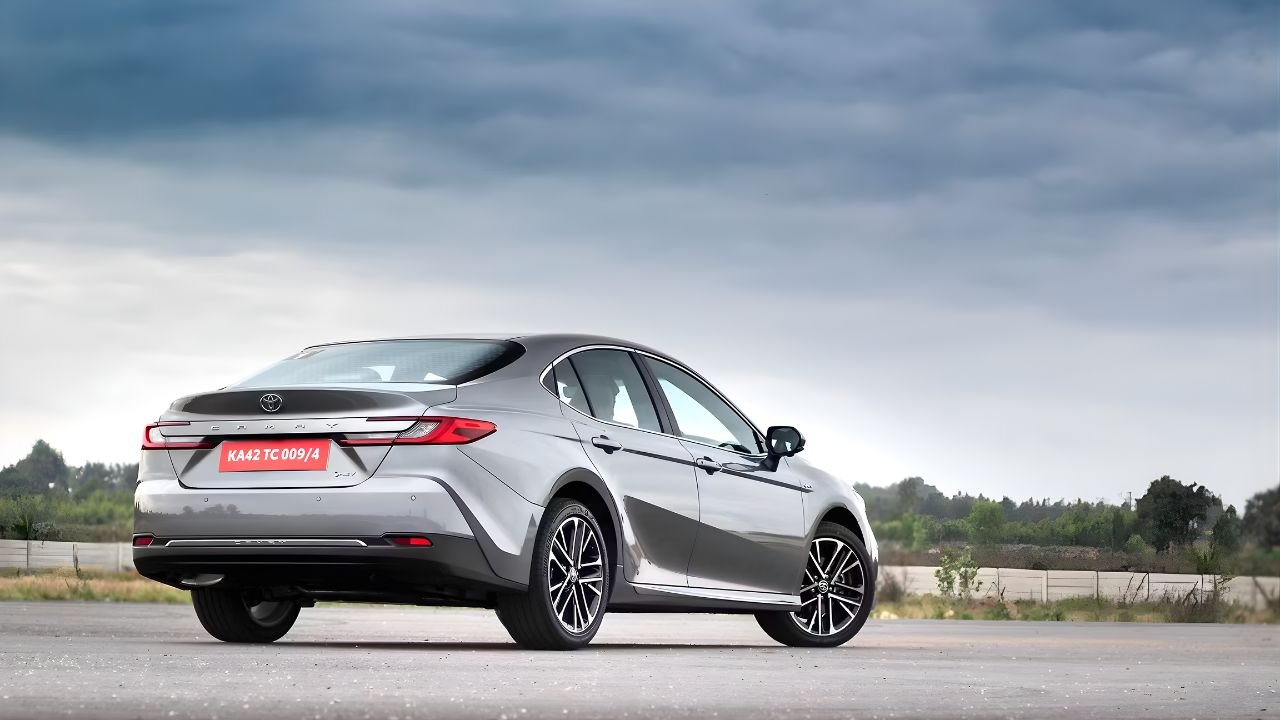
The midsize sedan market has long been defined by a select few stalwarts, but the 2026 Toyota Camry effectively secures its throne by doubling down on what modern drivers actually crave: efficiency and refined technology. Entering its second year of the ninth-generation redesign, the 2026 Camry remains a hybrid-only powerhouse, signaling a permanent shift away from traditional internal combustion engines in favor of the 5th Generation Toyota Hybrid System. This isn’t just a car for those looking to save on fuel; it is a meticulously engineered vehicle that balances a lower, wider stance with an athletic exterior that finally sheds the “boring” label once associated with the nameplate. From the hammerhead LED headlights to the available 19-inch gloss-black wheels on the sportier trims, the new Camry exudes a level of road presence that rivals entry-level luxury European sedans.
Performance and Engineering Excellence
Under the hood, the 2026 Camry utilizes a 2.5-liter four-cylinder engine paired with two electric motors in the front-wheel-drive (FWD) configuration, delivering a robust 225 horsepower. For those navigating tougher climates or seeking more grip, the Electronic On-Demand All-Wheel Drive (AWD) adds a third dedicated electric motor to the rear axle, bumping the total system output to 232 horsepower. What is truly impressive is how seamless the power delivery feels. The e-CVT transmission has been tuned to minimize the “rubber band” effect of older hybrids, providing a more linear acceleration feel that makes highway merging effortless. The steering is light yet communicative, particularly in the SE and XSE trims which feature a sport-tuned suspension that stays flat through corners without sacrificing the legendary ride quality the Camry is known for.
Interior Comfort and Advanced Technology
Inside the cabin, the 2026 model year feels more like a premium lounge than a standard commuter car. Toyota has transitioned to an open-concept layout, utilizing high-quality materials even in the base LE trim. However, the XLE and XSE trims are where the luxury truly shines, offering leather-trimmed seating with heating and ventilation, alongside a massive 12.3-inch Toyota Audio Multimedia touchscreen. The integration of wireless Apple CarPlay and Android Auto is standard across the board, ensuring your digital life remains connected without the clutter of cables. For audiophiles, the available nine-speaker JBL premium audio system provides a crisp, immersive soundstage that handles everything from podcasts to high-fidelity music with ease. Safety remains a cornerstone of the experience, with Toyota Safety Sense 3.0 coming standard, including proactive driving assist and a pre-collision system with pedestrian detection.
Pricing and Trim Variations for 2026
Finding the right balance between budget and luxury is easy given the diverse trim lineup for 2026. The entry-level LE trim starts at approximately $29,500, offering exceptional value for those prioritizing fuel economy and standard safety features. Moving up, the SE and the newly popular Nightshade Edition cater to the style-conscious with blacked-out accents and 19-inch wheels, typically priced between $32,000 and $35,000. For the ultimate experience, the XLE and XSE trims push the price closer to $38,000–$41,000 depending on optional packages like the Premium Plus, which adds a 360-degree Panoramic View Monitor and Traffic Jam Assist. While the initial investment might be higher than some compact rivals, the long-term value remains unmatched due to Toyota’s legendary reliability and the significant fuel savings provided by the hybrid powertrain.
Fuel Efficiency and Real-World Mileage
Mileage is perhaps the 2026 Camry’s strongest selling point in an era of fluctuating gas prices. The LE FWD model leads the pack with an EPA-estimated 51 MPG combined, making it one of the most efficient non-plug-in vehicles on the market today. Even the heavier, performance-oriented XSE AWD trim manages an impressive 44 to 46 MPG combined, proving that you don’t have to sacrifice all-weather capability for efficiency. In real-world testing, the regenerative braking system is unobtrusive, capturing energy during deceleration to keep the lithium-ion battery charged without any input from the driver. This car is designed for the long haul, often reaching over 600 miles of range on a single tank of regular unleaded fuel, which is a game-changer for daily commuters and road-trip enthusiasts alike.
Verdict: Is the 2026 Camry Right for You?
Ultimately, the 2026 Toyota Camry represents the pinnacle of the sensible sedan. It doesn’t try to be a track monster, nor does it pretend to be a rugged SUV; instead, it perfects the art of the daily drive. By eliminating the non-hybrid engine options, Toyota has simplified the choice for consumers, ensuring that every buyer gets a vehicle that is quiet, powerful, and environmentally conscious. While the trunk space is slightly impacted by the battery placement compared to old-school sedans, the 15.1 cubic feet of cargo room is more than enough for groceries or a family’s luggage. If you value peace of mind, low cost of ownership, and a modern aesthetic, the 2026 Camry is arguably the best midsize sedan currently available. It is a mature, polished, and highly competent machine that continues to set the benchmark for its class.
FAQs
Q1 Is the 2026 Toyota Camry available in a non-hybrid version?
No, starting with the ninth generation, the Toyota Camry is exclusively available as a hybrid. This allows for better fuel efficiency and smoother power delivery across all trim levels.
Q2 Does the 2026 Camry have All-Wheel Drive?
Yes, Electronic On-Demand All-Wheel Drive is available as an option on all trim levels, including the LE, SE, XLE, and XSE, using a dedicated rear electric motor.
Q3 What is the standard warranty for the 2026 Camry?
The 2026 Camry comes with a 3-year/36,000-mile basic warranty and a 5-year/60,000-mile powertrain warranty. Additionally, the hybrid battery is covered for 10 years or 150,000 miles, whichever comes first.